

The Many Versions of Grief: Why It Doesn’t Always Look the Same
Grief can feel emotional, numb, exhausting, isolating, or deeply confusing. This article explores the many ways grief can appear and why healing rarely follows a straight line.
Most People Expect Grief to Look Obvious
When people think about grief, they often imagine visible sadness.
Crying constantly. Struggling to function. Feeling emotionally devastated in ways that are immediately recognizable.
Sometimes grief does look like that.
But many people are surprised by how differently grief can actually show up once they experience it themselves.
For some, grief feels intensely emotional. For others, it feels strangely numb. Some people become more withdrawn. Others become busier than ever.
And many people move between different versions of grief without understanding why.
That unpredictability is part of what makes grief so disorienting.
Grief Is Not Only About Death
One of the biggest misunderstandings around grief is that it only applies to losing a person.
In reality, grief can emerge anytime someone loses:
connection
stability
identity
health
a relationship
a future they imagined
a version of life they expected
This is why grief can sometimes appear during experiences people do not immediately label as “loss.”
A breakup. Burnout. Moving away from home. A major life transition. A diagnosis. Even personal growth can involve grief when parts of life no longer feel the same.
At its core, grief is often the emotional response to change that cannot be undone.
Why It Feels Different for Everyone
People often worry they are grieving “wrong” because their experience does not match what they expected.
But grief is deeply shaped by:
personality
nervous system responses
relationship dynamics
past experiences
emotional support
the nature of the loss itself
Some people feel emotions immediately. Others experience delayed grief weeks, months, or even years later.
Some become highly emotional. Others feel disconnected from their emotions entirely for periods of time.
Neither automatically means the grief is less real.
Grief Can Affect the Mind and Body
Grief is not only emotional. It affects concentration, energy, memory, motivation, sleep, and the nervous system itself.
People experiencing grief may notice:
mental fog
exhaustion
difficulty focusing
emotional numbness
increased irritability
changes in appetite or sleep
This is partly because grief places significant emotional and physiological demands on the body and brain.
And unlike temporary stress, grief often moves in waves rather than steady improvement.
Some days may feel manageable. Others may suddenly feel heavy again without warning.
The Version People Often Do Not Expect
One of the quieter parts of grief is how isolating it can become.
Not always because people are alone, but because grief can create the feeling that life is continuing normally around you while something internally has changed completely.
Conversations may feel harder to participate in. Everyday responsibilities can begin feeling strangely disconnected from what you are carrying emotionally.
And sometimes, people stop talking about their grief not because it has disappeared, but because they worry:
they are talking about it too much
other people have moved on
they “should” be feeling better by now
This is one reason grief often becomes quieter over time externally while still remaining deeply present internally.
Grief and the Pressure to “Move On”
Many people unintentionally place timelines on grief.
They expect themselves to feel better quickly, return to normal functioning, or emotionally “move on” within a certain amount of time.
But grief rarely works in a straight line.
Healing does not usually mean forgetting, erasing, or no longer caring.
More often, it means slowly learning how to carry the loss without it overwhelming every part of life in the same way it once did.
And for many people, that adjustment takes significantly longer than they expected.
Grief Can Resurface Unexpectedly
One of the more confusing parts of grief is how suddenly it can reappear.
A smell. A song. A location. A random memory.
Something small can suddenly reconnect someone to emotions they thought had already settled.
This does not necessarily mean healing has failed.
Grief often remains connected to meaningful attachment, memory, and emotional significance. Certain experiences simply reconnect the nervous system to those emotional associations again.
FAQs
Why does grief sometimes feel numb instead of emotional?
The nervous system does not always process overwhelming experiences through visible emotion immediately. Emotional numbness can be a protective response during periods of significant emotional stress or loss.
Can grief affect concentration and memory?
Yes. Grief places heavy demands on emotional and cognitive systems, which can affect focus, attention, memory, and mental energy.
Why does grief come in waves instead of improving steadily?
Because grief is connected to memory, attachment, and emotional processing. Different situations, reminders, or stress levels can reactivate grief at different times.
Is it normal for grief to last longer than expected?
Absolutely. Grief does not follow a universal timeline, and many people continue emotionally processing important losses far longer than they initially anticipated.
Grief Changes Shape Rather Than Simply Disappearing
One of the hardest parts of grief is that people often expect it to end cleanly.
But grief is usually less about “getting over” a loss and more about gradually learning how life continues around something meaningful that changed.
And because every loss carries different emotional meaning, grief rarely looks identical from one person to another.
For many people, healing is not about forgetting what mattered to them.
It is about reaching a point where the loss no longer feels like the only thing their mind and body can hold at once.
Until next time, go beyond.
Ten








Living With OCD Is More Exhausting Than People Realize
OCD is often misunderstood. This article explores intrusive thoughts, compulsions, reassurance-seeking, and the exhausting mental effort involved in constantly searching for certainty.
OCD Is Often Misconstrued as “Being Particular”
When many people think about OCD, they picture neatness, organization, or liking things a certain way.
But obsessive-compulsive disorder is not simply about preferences or perfectionism.
For many people, OCD feels far more consuming and exhausting than others realize.
It can feel like living with a mind that struggles to fully let go of uncertainty. Thoughts repeat. Doubt lingers. Mental checking continues long after someone logically knows they should feel reassured.
And often, the exhausting part is not only the thought itself.
It is the feeling that the thought refuses to leave.
It’s Not Just About Thoughts — It Is About the Need for Certainty
Most people experience intrusive or unwanted thoughts occasionally.
The difference with OCD is not necessarily the presence of the thought. It is the weight the thought begins carrying once it appears.
The brain starts treating uncertainty like something urgent that must be solved, checked, prevented, or neutralized.
That can lead to compulsions such as:
checking
reassurance-seeking
repeating behaviours
mental reviewing
avoiding situations that trigger doubt
These compulsions are usually attempts to reduce anxiety or create certainty.
The problem is that relief tends to be temporary.
And over time, the cycle often becomes more emotionally exhausting, not less.
Intrusive Thoughts Can Be Deeply Misunderstood
One of the more painful parts of OCD is how disturbing intrusive thoughts can feel to the person experiencing them.
Many people with OCD are not disturbed because they want the thoughts.
They are disturbed because the thoughts feel so opposite to who they are, what they value, or how they see themselves.
This is part of why OCD is frequently connected to shame and silence.
People may fear:
being judged
misunderstood
seen as dangerous
or “crazy”
Meanwhile, they are often experiencing intense distress precisely because the thoughts feel unwanted and deeply inconsistent with their values.
Why Reassurance Rarely Fully Works
People with OCD often search for reassurance because certainty feels emotionally urgent.
They may:
ask the same question repeatedly
mentally review situations over and over
seek confirmation from others
analyze whether they are “really okay”
The difficulty is that reassurance usually provides only short-term relief.
Very quickly, the doubt returns:
But what if I missed something?
What if I’m wrong?
What if there’s still a chance?
This is one reason OCD can become so mentally exhausting. The mind continues trying to reach a level of certainty that human beings are rarely able to achieve completely.
OCD Can Become Incredibly Time-Consuming Internally
One of the reasons OCD is often misunderstood is because many compulsions happen mentally, not visibly.
From the outside, someone may appear calm or functional while internally spending enormous amounts of energy:
replaying conversations
mentally checking memories
analyzing thoughts
monitoring reactions
trying to “prove” something to themselves
That invisible mental effort can become exhausting over time.
And because much of it happens internally, many people with OCD feel profoundly alone in the experience.
The Relationship Between OCD and Responsibility
Many forms of OCD are tied to an inflated sense of responsibility.
People may feel intensely responsible for:
preventing harm
making the “right” decision
avoiding mistakes
protecting others
controlling outcomes they realistically cannot fully control
This often creates constant mental pressure.
Not because someone is careless, but because they care so deeply that uncertainty begins feeling emotionally intolerable.
Why OCD Becomes Harder Under Stress
Many adults and teens across Calgary, including Bridgeland and East Calgary, notice OCD symptoms becoming more intense during periods of chronic stress, burnout,transition, or emotional overwhelm.
Stress increases nervous system activation, which can make intrusive thoughts feel louder, more urgent, and harder to disengage from.
And when emotional capacity decreases, the urge to seek certainty often increases alongside it.
This is why OCD can sometimes feel cyclical. During stressful periods, the mind often searches even harder for reassurance, predictability, and control.
FAQs
Do people with OCD know their fears may not fully make sense?
Often, yes. Many people with OCD logically recognize that their level of fear or doubt feels disproportionate, but the emotional urgency still feels very real.
Why do intrusive thoughts feel so disturbing?
Usually, because they conflict deeply with the person’s values, identity, or sense of safety. The distress often comes from how unwanted the thoughts feel.
Can OCD exist mostly internally?
Absolutely. Many compulsions are mental rather than visible, including reviewing, analyzing, counting, reassurance-seeking, or mentally checking experiences repeatedly.
Why does certainty feel so important in OCD?
Because the brain begins treating uncertainty as emotionally threatening. Compulsions often become attempts to reduce that uncertainty, even temporarily.
It’s Less About the Thought and More About the Inability to Let It Go
One of the hardest parts of OCD is how relentless it can feel.
Not because people believe every thought completely, but because the mind keeps demanding resolution long after resolution is realistically possible.
And over time, that constant internal monitoring can become exhausting in ways other people rarely see.
Because living with OCD is not simply about being worried, organized, or particular.
For many people, it feels more like carrying a mind that struggles to stop searching for certainty in situations where certainty may never fully exist.
Until next time, go beyond.
Ten

Boundaries: The Weight of Always Saying Yes
Boundaries are often less about saying no and more about recognizing your own emotional capacity. This article explores guilt, burnout, people-pleasing, and the emotional cost of always being available.
Saying “Yes” Is Not Always a Sign That Something Feels Right
Most people do not struggle with boundaries because they are weak or incapable of saying no.
More often, they struggle because saying yes has become connected to:
keeping the peace
avoiding disappointment
maintaining relationships
preventing conflict
feeling responsible for how other people feel
Over time, constantly accommodating others can begin feeling automatic.
People agree to plans they do not have energy for. They take on responsibilities they are already overwhelmed by. They continue showing up emotionally for others while quietly feeling depleted themselves.
And eventually, the exhaustion starts becoming harder to ignore.
Boundaries Are Often Misunderstood
When people hear the word “boundaries,” they often imagine something harsh or confrontational.
Being cold. Pushing people away. Refusing to help.
But healthy boundaries are not about shutting people out.
They are about recognizing that emotional energy, time, attention, and capacity are not unlimited.
Without boundaries, many people slowly begin organizing their lives around other people’s comfort while losing touch with their own needs in the process.
That imbalance rarely feels dramatic at first.
Usually, it builds gradually through small moments of self-abandonment repeated over time.
Why Saying No Can Feel So Uncomfortable
For some people, saying no triggers guilt almost immediately.
Not because the boundary is unreasonable, but because the nervous system has learned to associate conflict, disappointment, or disapproval with emotional risk.
This is especially common in people who:
grew up managing other people’s emotions
were rewarded for being easygoing or selfless
learned that their needs created tension
became highly attuned to keeping relationships stable
In those situations, saying yes can start feeling emotionally safer than setting limits, even when the yes comes at a personal cost.
The Problem With Constant Emotional Availability
Many adults across Calgary, including Bridgeland and East Calgary, are balancing work stress, relationships, caregiving responsibilities, social expectations, and emotional exhaustion simultaneously.
The problem is that people often continue giving from a place of depletion long after their capacity is already stretched.
They answer messages when they need rest. Agree to things they resent later. Stay emotionally available even when they feel mentally exhausted.
And because they are still functioning externally, the burnout underneath can remain invisible for a long time.
This is one reason boundaries are not only relational skills. They are also nervous system protection.
Without limits, the mind and body rarely get an opportunity to fully recover.
When People Stop Recognizing Their Own Limits
One of the quieter consequences of poor boundaries is that people can gradually lose awareness of their own needs altogether.
They become so focused on:
adapting
accommodating
helping
anticipating others
that they stop regularly asking themselves important questions like:
Do I actually have the capacity for this?
Am I agreeing because I want to, or because I feel guilty?
What would happen if I disappointed someone here?
Over time, this can create a strange form of emotional disconnection where someone remains highly responsive to everyone else while feeling increasingly disconnected from themselves.
Boundaries Often Change Relationships
One of the more difficult realities about boundaries is that relationships sometimes shift when boundaries improve.
People who benefited from unlimited access, constant availability, or over-accommodation may react with confusion, frustration, or resistance when limits start changing.
That does not automatically mean the boundary is wrong.
In fact, healthy boundaries often reveal which relationships were relying on overextension rather than mutual balance.
This can feel uncomfortable at first, especially for people who are used to earning connection through constant giving.
Boundaries Are Not About Becoming Less Caring
Many people fear that setting boundaries will make them selfish, distant, or uncaring.
But boundaries are not the opposite of compassion.
Often, they are what make sustainable compassion possible.
When people consistently ignore their own capacity, resentment, emotional exhaustion, and burnout tend to build quietly underneath the surface. Over time, even relationships that matter deeply can begin feeling heavy.
Healthy boundaries help create relationships where care exists alongside honesty, capacity, and emotional sustainability.
FAQs
Why do boundaries feel harder for some people than others?
Because boundaries are shaped by past experiences, relationship dynamics, nervous system responses, and beliefs about responsibility, conflict, and emotional safety.
Can poor boundaries lead to burnout?
Absolutely. Constantly overriding personal limits and emotional capacity can create chronic stress and emotional exhaustion over time.
Why do people feel guilty after setting boundaries?
For many people, guilt appears because boundaries disrupt old relational patterns. The discomfort does not necessarily mean the boundary was unhealthy.
Can boundaries improve relationships instead of harming them?
Yes. Healthy boundaries often create more honest, sustainable, and emotionally balanced relationships over time.
Boundaries Are Often About Learning That Your Needs Matter Too
One of the hardest parts of boundary-setting is that it often requires people to tolerate discomfort they have spent years trying to avoid.
Disappointing someone. Being misunderstood. Not being endlessly available.
But constantly abandoning your own limits eventually creates a different kind of discomfort — one that often looks like resentment, emotional exhaustion, or quietly losing connection with yourself.
Because boundaries are not really about learning how to say no.
They are about learning that your time, energy, emotions, and capacity deserve consideration too.
Until next time, go beyond.
Ten

Relationships: The Difference Between Alone & Lonely
You can feel lonely even when surrounded by people. This article explores emotional disconnection, relationship loneliness, and why feeling understood matters more than simply being around others.
You Can Feel Lonely Even When You’re Not Alone
Loneliness is often misunderstood as simply being by yourself.
But many people experience loneliness while surrounded by other people.
They go to work. Spend time with family. Reply to messages. Sit beside a partner at the end of the day.
And still, something feels emotionally distant.
That is because loneliness is not always about physical isolation. More often, it is about feeling unseen, emotionally disconnected, or unable to fully share what is happening internally.
For many adults and teens, loneliness feels less like having nobody and more like feeling emotionally alone in experiences they do not know how to explain.
Relationships Can Exist Without Emotional Connection
One of the more confusing parts of loneliness is that it can happen inside relationships that technically still “look fine.”
People may still communicate, live together, make plans, and maintain routines while quietly feeling disconnected from one another emotionally.
Over time, conversations can become more functional than personal:
discussing schedules
responsibilities
logistics
tasks that need to get done
Meanwhile, emotional closeness slowly receives less attention.
Not usually because people stop caring, but because stress, exhaustion, mental overload, and life demands gradually reduce the energy people have available for deeper connection.
And when emotional connection decreases slowly, many people do not recognize how lonely they have become until the distance feels much larger.
Loneliness Often Builds Quietly
Very few people suddenly become lonely overnight.
More often, loneliness develops gradually through small forms of disconnection repeated over time.
People stop sharing certain thoughts. They begin saying “I’m fine” automatically. They avoid vulnerability because it feels easier than explaining themselves.
Over time, emotional experiences become increasingly private.
This is part of why loneliness can feel so difficult to describe. Someone may technically have support around them while still feeling emotionally disconnected from the people closest to them.
Why Feeling Emotionally Understood Matters So Much
Human beings are not only wired for social interaction. They are wired for emotional recognition.
There is a significant difference between:
being around people
and feeling emotionally understood by them
Someone can have frequent interaction and still feel profoundly disconnected if they do not feel safe expressing themselves honestly.
This is often why emotionally validating relationships feel so regulating to the nervous system. Feeling understood reduces emotional isolation, lowers defensiveness, and creates a greater sense of psychological safety.
Without that connection, many people begin feeling emotionally “alone” even in otherwise busy lives.
Stress and Burnout Can Affect Relationships Significantly
Many adults across Calgary, including Bridgeland and East Calgary, are balancing work stress, parenting responsibilities, financial pressure, emotional exhaustion, and constant mental stimulation all at once.
The problem is that chronic stress often reduces relational energy before people fully notice it.
Patience becomes shorter. Emotional availability decreases. Conversations become more reactive or surface-level. People begin operating beside each other instead of truly with each other.
This is one reason relationships can start feeling lonely even when there is no major conflict happening.
Sometimes the issue is not the absence of love.
It is the absence of emotional presence.
Loneliness Can Exist in Different Forms
Not everyone experiences loneliness the same way.
For some people, loneliness feels like:
emotional disconnection
lack of closeness
feeling misunderstood
For others, it feels more like:
not feeling prioritized
struggling to open up
feeling emotionally separate from the people around them
constantly feeling “outside” of connection
And importantly, some people become so accustomed to emotional distance that they stop recognizing loneliness until they finally experience genuine closeness again.
Why Some People Struggle to Reach Out
One of the more painful parts of loneliness is that it often makes reaching outward feel harder, not easier.
People may begin thinking:
“I don’t want to burden anyone.”
“They probably wouldn’t understand anyway.”
“I should be able to handle this myself.”
Over time, isolation can become self-protective.
The less emotionally connected someone feels, the harder vulnerability can become. And the harder vulnerability becomes, the easier it is for loneliness to deepen quietly in the background.
FAQs
Why can someone feel lonely in a healthy-looking relationship?
Because loneliness is not only about proximity. Emotional disconnection can still exist even when relationships appear stable from the outside.
Can stress affect emotional closeness in relationships?
Absolutely. Chronic stress often reduces emotional availability, patience, and energy for deeper connection long before people recognize its impact relationally.
Why do some people hide their loneliness?
Many people fear being misunderstood, judged, or emotionally vulnerable. Others have spent so long minimizing their own emotional needs that loneliness becomes difficult to admit, even to themselves.
Does loneliness always mean someone lacks relationships?
No. Some of the deepest loneliness people experience happens while surrounded by friends, family, coworkers, or partners.
Loneliness Is Often Less About Isolation and More About Emotional Distance
One of the hardest parts of loneliness is that it is frequently invisible.
People continue functioning. Relationships continue existing. Conversations continue happening.
But internally, something can still feel missing.
Because what many people are truly searching for is not simply interaction.
It is the feeling of being emotionally known, understood, and connected in a way that allows them to stop feeling alone inside their own experience.
And when that kind of connection has been missing for a long time, even small moments of genuine understanding can feel surprisingly powerful.
Until next time, go beyond.
Ten

Emotional Regulation: When Feelings Feel Bigger Than the Moment
Emotional regulation is often misunderstood. This article explores why emotions can sometimes feel bigger than the situation itself, how stress affects the nervous system, and why emotional overwhelm is not simply about “overreacting.”
Sometimes the Reaction Feels Bigger Than the Situation
Most people have experienced a moment where their emotional reaction surprised them.
A small disagreement suddenly feels overwhelming. A minor inconvenience ruins the rest of the day. A comment that seemed insignificant keeps replaying long after the moment ends.
And afterward, there’s often another thought layered on top of the emotion:
“Why did that hit me so hard?”
But emotional regulation is not simply about being calm, rational, or unaffected all the time. It is about how the nervous system processes, responds to, and recovers from emotional experiences.
And sometimes, that system becomes overloaded faster than people realize.
Emotional Regulation Is Not the Same as Emotional Control
One of the biggest misconceptions around emotional regulation is that “regulated” people do not feel emotions intensely.
That is not true.
Emotional regulation is not the absence of emotion. It is the ability to move through emotions without becoming completely consumed by them.
Some people experience emotions more quickly, more deeply, or more physically than others. That can be influenced by:
past experiences
nervous system sensitivity
In those moments, the emotional response itself is often real and valid.
The difficulty is usually not the feeling — it is how much the feeling takes over once it arrives.
Why Small Things Sometimes Feel So Big
Emotional reactions rarely happen in isolation.
What looks like “overreacting” is often the nervous system responding to accumulated load.
Stress that has not fully settled. Emotional exhaustion. Ongoing pressure. Feeling mentally overstretched for too long.
When the nervous system is already carrying a high level of activation, even relatively small situations can trigger disproportionately intense reactions.
This is part of why people sometimes say:
“I know it’s not a big deal, but it feels like one.”
“Normally, this wouldn’t bother me so much.”
“I don’t know why I’m reacting this strongly.”
Often, the moment itself is not the entire story.
It is simply the point where the emotional capacity that was already stretched begins running out.
The Nervous System Responds Before Logic Does
People often assume emotions are fully rational decisions.
In reality, emotional responses happen extremely quickly.
Before the thinking part of the brain fully evaluates a situation, the nervous system has often already reacted. Heart rate changes. Muscles tense. Attention narrows. Emotional intensity increases.
Logic usually arrives after the emotional activation has already started.
That is why emotional regulation can feel so frustrating. Many people understand logically that a situation is manageable while still feeling emotionally overwhelmed by it.
The emotional response is not happening because someone is weak or irrational.
It is happening because the nervous system is responding faster than conscious thought can catch up.
Emotional Regulation Often Becomes Harder Under Chronic Stress
Many adults and teens across Calgary, including Bridgeland and East Calgary, are functioning while carrying ongoing levels of stress they have adapted to over time.
The problem is that chronic stress reduces emotional capacity gradually.
People become less patient. More reactive. More emotionally exhausted. It becomes harder to recover fully between stressors.
And because the buildup is often slow, emotional regulation difficulties can seem like they appear “suddenly,” even when the nervous system has been overloaded for a long time.
When Emotional Reactions Start Feeling Unpredictable
One of the more difficult parts of emotional dysregulation is not always the emotion itself.
It is the uncertainty around it.
People may start feeling unsure of how strongly they will react, how long the feeling will last, or how difficult it will be to settle afterward.
That unpredictability can quietly change how someone moves through everyday life.
Some people begin avoiding conflict altogether. Others overprepare emotionally before conversations, mentally rehearse situations in advance, or become highly sensitive to shifts in tone, tension, or disappointment.
Not because they are dramatic or fragile, but because emotionally intense moments can begin feeling difficult to contain once they start.
Over time, many people stop trusting their ability to stay emotionally steady under stress, even in situations they logically know they can handle.
Emotional Regulation Looks Different for Different People
Some people externalize emotions:
anger
frustration
visible overwhelm
Others internalize them:
shutting down
emotional numbness
withdrawing
mentally spiraling
Both are forms of emotional dysregulation.
And importantly, many people who appear “calm” externally are still experiencing intense emotional activation internally.
That internal exhaustion is often missed because it is less visible.
FAQs
Why do emotions sometimes feel physically overwhelming?
Emotions are not only psychological experiences. They involve the nervous system and body as well, which is why emotional overwhelm can feel physical through tension, restlessness, chest tightness, or exhaustion.
Can stress lower emotional tolerance over time?
Yes. Chronic stress gradually reduces emotional capacity, making reactions happen faster and recovery take longer.
Why do some people shut down emotionally instead of reacting outwardly?
Not everyone externalizes overwhelm. Some nervous systems respond by withdrawing, emotionally numbing, or mentally disengaging instead.
Can emotional regulation difficulties affect relationships?
Absolutely. When emotions feel difficult to predict or recover from, people may begin avoiding conversations, conflict, vulnerability, or emotional closeness altogether.
Emotional Regulation Is Less About “Staying Calm” and More About Capacity
One of the biggest misunderstandings around emotional regulation is the belief that emotionally healthy people stay calm all the time.
In reality, emotional regulation is much more connected to capacity than perfection.
When the nervous system is rested, supported, and not overloaded, emotions are often easier to process and recover from. When stress accumulates for too long, even small situations can begin feeling emotionally heavy.
That does not mean someone is failing.
It means their system may be carrying more than it has fully recovered from.
And often, emotional regulation starts improving not when people become less emotional, but when they stop expecting themselves to function like they are unaffected by everything they are carrying.
Until next time, go beyond.
Ten

ADHD: Trying Harder Than People Realize
Adult ADHD is often far more exhausting than people realize. This article explores the invisible mental effort behind focus, emotional regulation, motivation, and everyday functioning.
ADHD Is Often Misunderstood in Adults
When most people picture ADHD, they imagine distraction.
Difficulty focusing. Hyperactivity. Constant restlessness.
Those experiences can absolutely be part of ADHD, but for many adults, ADHD feels far more complicated — and far less visible — than people expect.
Some adults with ADHD are highly capable, thoughtful, organized-looking, and deeply motivated. From the outside, they may appear to be managing well.
Internally, though, many describe feeling like everyday life requires significantly more effort than it seems to require for other people.
That disconnect is part of what makes adult ADHD difficult to recognize, especially in people who have spent years compensating for it quietly.
Be Assured, It’s Not a Lack of Effort
One of the most damaging misconceptions about ADHD is that people simply are not trying hard enough.
In reality, many adults with ADHD are trying extremely hard almost all the time.
The difficulty is not usually caring. It is regulating:
attention
prioritization
working memory
task initiation
mental organization
This is why someone with ADHD may fully understand what needs to be done and still feel unable to begin.
From the outside, that can look confusing or inconsistent. Internally, it often feels frustrating and exhausting.
Especially because many adults with ADHD are constantly compensating in ways other people never see.
The Invisible Work Behind “Keeping Up”
A lot of ADHD symptoms happen internally.
People may spend large amounts of energy:
reminding themselves not to forget things
mentally rehearsing tasks
trying to stay organized
recovering from distractions
rebuilding focus after interruptions
Over time, this creates a level of mental effort that can become difficult to explain to people who do not experience it themselves.
This is part of why many adults with ADHD describe feeling chronically overwhelmed, even when their workload does not appear extreme from the outside.
It is not always the amount of responsibility that becomes exhausting.
Often, it is the amount of mental regulation required just to stay on track.
Why ADHD Can Affect Emotions So Strongly
ADHD is often discussed in terms of focus and productivity, but emotional regulation is also deeply connected to it.
Many adults with ADHD experience emotions intensely and quickly. Frustration, shame, excitement, rejection, or overwhelm can feel difficult to regulate once activated.
Part of this comes from how ADHD affects impulse regulation and nervous system responsiveness. Emotional reactions may happen faster than the ability to slow down and process them.
This can create experiences like:
emotional overwhelm
irritability
rejection sensitivity
shutting down under pressure
feeling emotionally “too much”
For many adults, these emotional experiences become more impairing than the attention difficulties themselves.
ADHD and the Cycle of Self-Doubt
Many adults with ADHD grow up receiving messages that they are:
careless
lazy
inconsistent
not applying themselves
Even when those labels are inaccurate, hearing them repeatedly can shape how someone begins interpreting themselves.
Over time, many adults with ADHD become highly self-critical. They may push themselves harder, overcompensate, or constantly feel like they are falling behind, regardless of how much effort they are putting in.
This is one reason adult ADHD is frequently tied to anxiety, burnout, and low self-esteem.
Not because the person lacks capability, but because functioning has required so much sustained effort for so long.
Why ADHD Often Goes Unnoticed for Years
Not everyone with ADHD struggles academically or appears outwardly disorganized.
Some people compensate through perfectionism, overpreparing, high intelligence, or intense internal pressure. Others thrive in environments that naturally match how their brain works and only begin struggling later when responsibilities increase.
For many adults across Calgary, including Bridgeland and East Calgary, ADHD is not recognized until adulthood because the signs were misunderstood for years.
Sometimes the realization comes after burnout. Sometimes after parenting, post-secondary education, or workplace demands increase.
And often, the response is not only relief — but grief for how long things felt harder than they needed to.
It Can Affect Rest as Much as Productivity
One of the quieter parts of ADHD is how difficult it can be to fully “switch off.”
Even during downtime, many adults describe their mind as:
mentally busy
jumping between thoughts
scanning for unfinished tasks
struggling to settle
This is partly because ADHD affects attention regulation broadly, not only during work or school tasks.
Rest itself can become difficult when the brain struggles to disengage from stimulation or mental activity.
FAQs
Why do adults with ADHD often feel guilty even when they’re trying hard?
Because many adults with ADHD grow up internalizing the idea that inconsistency means laziness or lack of effort. Over time, struggles with attention or follow-through can become interpreted as personal failures instead of neurological challenges.
Why can people with ADHD focus intensely sometimes but struggle other times?
ADHD is not simply a deficit of attention — it is largely a difficulty regulating attention. Interest, urgency, novelty, stress, and stimulation can all dramatically affect how accessible focus feels in a given moment.
Can ADHD make everyday life feel mentally “louder”?
Yes. Many adults with ADHD describe constantly managing competing thoughts, unfinished tasks, reminders, distractions, and internal dialogue all at once. Even ordinary responsibilities can begin feeling mentally crowded over time.
Why do adults with ADHD often feel burnt out?
Because many spend years overcompensating. They may rely on pressure, perfectionism, masking, or overworking to stay on top of responsibilities, which can become exhausting to sustain long-term.
ADHD Feels Less Like “Not Trying” and More Like Never Fully Catching Up
One of the hardest parts of adult ADHD is how invisible the effort can become.
Other people may only see missed deadlines, distraction, inconsistency, or overwhelm. They often do not see the amount of mental work happening underneath those moments.
And after enough years of compensating, many adults stop recognizing how hard they are working simply to maintain what appears “normal” from the outside.
But ADHD is not a reflection of laziness, intelligence, or character.
For many people, it feels more like living with a brain that requires constant regulation in a world that assumes regulation should happen automatically.
And that can become exhausting long before anyone else realizes it.
Until next time, go beyond.
Ten

Depression & Disconnection: When You Stop Feeling Like Yourself
Depression can feel less like sadness and more like disconnection from yourself, other people, and everyday life. This article explores the quieter signs of depression and why they are often missed.
Depression Does Not Always Feel Like Sadness
One of the biggest misconceptions about depression is that it always looks emotional.
Crying constantly. Feeling visibly hopeless. Struggling to get out of bed every day.
Sometimes depression does look like that. But for many people, especially adults and teens who continue functioning outwardly, it can feel much quieter and much harder to identify while it’s happening.
For some, depression feels less like sadness and more like disconnection.
Disconnection from motivation. From enjoyment. From other people. Sometimes even from yourself.
That’s part of why depression can go unnoticed for longer than people expect. The experience often feels flat, dull, distant, or emotionally muted rather than obviously overwhelming.
When Life Starts Feeling Muted
Many people describe depression as feeling emotionally “numb,” but numbness is not always the absence of emotion.
Often, it’s the absence of emotional access.
Things that used to feel enjoyable start feeling neutral. Conversations take more effort. Motivation becomes harder to generate. Even rest doesn’t always feel restorative.
Over time, everyday experiences can begin losing their emotional texture.
This is part of why depression can become confusing. People often assume that if they’re still functioning, working, socializing occasionally, or getting through responsibilities, then what they’re experiencing must not “count.”
But depression is not measured only by whether someone can continue functioning.
Sometimes the clearest sign is that life no longer feels fully felt.
It Often Changes Energy Before Mood
One of the less talked-about parts of depression is how strongly it affects energy and cognitive functioning.
People may notice:
difficulty concentrating
mental fog
low motivation
increased exhaustion
feeling slowed down internally
Even small tasks can begin feeling heavier than they used to.
And unlike ordinary tiredness, the exhaustion connected to depression often does not fully improve with rest. Someone can sleep more and still feel mentally drained.
This is partly because depression affects more than emotion. It influences attention, nervous system regulation, motivation, and the brain’s ability to experience reward and momentum.
The Isolation That Slowly Builds
Depression often creates distance gradually.
People may start replying less, cancelling plans more often, or withdrawing socially in ways that feel subtle at first. Not necessarily because they want to be alone, but because connection starts requiring more energy than it used to.
That isolation can become self-reinforcing.
The more disconnected someone feels, the harder it becomes to reach outward. And the harder it becomes to reach outward, the easier it is for the disconnection to deepen.
For many adults across Calgary, including Bridgeland and East Calgary, this part of depression is one of the most difficult to explain to other people because it can happen quietly over time.
Why Depression Can Be Hard to Recognize in Yourself
Depression rarely announces itself clearly.
More often, it blends into routines and explanations that feel easier to justify:
“I’m just tired.”
“I’ve been stressed lately.”
“I think I just need a break.”
And sometimes those things are true.
But when the feeling persists, deepens, or begins affecting how connected someone feels to themselves or their life, it may be something more than temporary exhaustion.
Part of what makes depression difficult to recognize is that it often changes perspective slowly. People adapt to feeling disconnected in the same way someone adapts to dim lighting after enough time passes.
Depression and Self-Criticism Often Grow Together
Many people experiencing depression become increasingly self-critical without fully realizing it.
Tasks feel harder, motivation drops, and emotional energy decreases. Instead of recognizing these as symptoms, people often interpret them personally:
“I’m lazy.”
“I should be handling this better.”
“Other people seem fine.”
That internal dialogue can intensify the experience itself.
Because depression already reduces emotional energy, carrying ongoing self-judgment on top of it can make people feel even more stuck and disconnected.
Depression in Teens Can Look Different Than Depression in Adults
In teens, depression is not always obvious sadness.
Sometimes it looks more like:
irritability
emotional shutdown
withdrawal from family
loss of motivation
increased sensitivity
difficulty keeping up academically or socially
Adults may experience these too, but adult depression often becomes quieter and more internalized over time.
People continue functioning while privately feeling disconnected from themselves, their relationships, and the parts of life that used to feel meaningful.
FAQs
Why do people with depression pull away from others even when they want support?
Because connection can start feeling emotionally effortful. Many people with depression still want closeness, but feel they have less energy available to participate in conversations, plans, or emotional interaction the way they normally would.
Can depression make you feel disconnected from yourself?
Yes. Some people describe depression less as sadness and more as feeling emotionally distant from their own personality, interests, motivation, or sense of identity.
Why does depression often come with guilt or self-criticism?
Depression changes energy, focus, and motivation, but many people interpret those changes personally. Instead of seeing symptoms, they see themselves as failing, which can deepen feelings of guilt and hopelessness.
Can someone look “fine” and still be struggling with depression?
Absolutely. Many adults and teens continue functioning outwardly while privately feeling emotionally exhausted, disconnected, or numb.
Depression Often Feels Like Slowly Losing Connection to Yourself
One of the hardest parts of depression is that it often develops gradually.
People adapt to lower energy. Reduced motivation becomes routine. Emotional distance starts feeling normal simply because it has been there long enough.
And because depression is frequently quieter than people expect, many individuals continue blaming themselves instead of recognizing what they’re experiencing.
But depression is not a personal failure or a lack of effort.
For many people, it feels more like moving through life with less emotional access to the things that once made them feel connected, engaged, and fully present.
And often, one of the first meaningful shifts is simply realizing that experience has a name—and that it can begin to change.
Until next time, go beyond.
Ten

The Trials and Tribulations of Anxiety
Anxiety is often quieter than people expect. This article explores how anxiety can show up through overthinking, chronic stress, physical symptoms, and the exhausting pressure of always staying mentally “on.”
Anxiety Rarely Feels the Way People Expect It To
Most people imagine anxiety as something obvious.
A racing heart. Panic. Constant worry. Feeling visibly overwhelmed.
Sometimes it looks like that. But often, anxiety is much quieter and much harder to recognize while it’s happening.
It can look like overthinking simple decisions, struggling to fully relax, replaying conversations long after they end, or feeling mentally “on” even during moments that are supposed to feel calm.
For many adults and teens across Calgary, including Bridgeland and East Calgary, anxiety becomes less of a dramatic feeling and more of a constant background state. After a while, it can start to feel normal, even when it’s exhausting.
That’s part of what makes anxiety difficult to identify in the first place.
It Often Begins as an Attempt to Stay Ahead
One of the most misunderstood parts of anxiety is that it usually develops for a reason.
At its core, anxiety is a system designed to anticipate problems, notice risk, and keep you prepared. In small amounts, that system can be helpful. It helps people plan ahead, stay aware, and respond quickly when something matters.
The difficulty is that anxiety rarely knows when to fully stand down.
Instead of turning on only when something is genuinely wrong, it can begin treating ordinary situations like they require the same level of attention and urgency.
That shift changes how everyday life feels.
Small decisions carry more weight. Uncertainty becomes harder to tolerate. Rest starts feeling less restorative because part of your attention remains active, scanning for what might go wrong next.
Over time, many people stop noticing how much energy this takes because they’ve adapted to functioning that way.
The Exhausting Side of “Functioning Fine”
One of the reasons anxiety is easy to miss is because many anxious people continue functioning at a high level.
They go to work. They meet deadlines. They show up for people. From the outside, things may even appear very organized.
Internally, though, the experience can feel very different.
There’s often a constant layer of mental management happening in the background:
thinking ahead
double-checking
preparing for worst-case scenarios
mentally rehearsing conversations
struggling to fully switch off
This is why some people describe anxiety less as panic and more as never fully relaxing.
The body and mind remain slightly activated, even during moments that are supposed to feel neutral.
When It Can Feel Physical
Anxiety is not only emotional. It is physiological.
When the brain detects potential threat or uncertainty, the nervous system responds automatically. Stress hormones increase. Muscles tighten. Attention narrows.
That response can create very real physical symptoms:
tension headaches
stomach discomfort
restlessness
chest tightness
difficulty sleeping
exhaustion that doesn’t fully improve with rest
For some people, the physical symptoms become more noticeable than the anxious thoughts themselves.
That’s part of why anxiety is sometimes mistaken for simply “being stressed,” especially in adults who are used to pushing through discomfort.
The Need to Stay in Control
Anxiety often pulls people toward control, even when they don’t realize it.
Not necessarily controlling other people, but controlling outcomes, possibilities, or uncertainty.
You may notice this in the urge to:
overprepare
seek reassurance
think through every scenario
avoid mistakes at all costs
keep everything “handled”
The goal underneath these behaviours is usually the same: reducing uncertainty.
The problem is that uncertainty is part of everyday life, which means anxiety rarely reaches a point where it feels fully satisfied.
How Anxiety Quietly Changes Everyday Life
One of the quieter effects of anxiety is that it changes how neutral experiences feel.
A delayed text can suddenly feel loaded with meaning. A small mistake can feel disproportionately important. Rest can feel uncomfortable instead of restorative because your mind is still anticipating what’s next.
This is also why anxious people are often described as “overthinking,” even when what they’re really experiencing is difficulty disengaging from uncertainty and possibility.
Over time, that ongoing mental activity can become exhausting enough to affect concentration, relationships, sleep, and emotional regulation.
And after a while, that level of tension can begin to feel like personality instead of exhaustion.
Anxiety in Adults and Teens Can Look Different
Anxiety does not always present the same way across age groups.
In teens, it may look more emotional or external:
irritability
avoidance
school-related stress
emotional outbursts
In adults, it often becomes more internalized and functional-looking:
constant mental pressure
difficulty relaxing
over-responsibility
feeling mentally “busy” all the time
In both cases, anxiety is often less about weakness and more about a system that has become overextended.
FAQs
Why does anxiety feel constant even when life is “fine”?
Because anxiety is often driven more by anticipation than by immediate danger. Your mind stays focused on what could happen, which can create a feeling of ongoing mental pressure even during relatively calm periods.
Can anxiety become part of someone’s personality?
Not exactly, but it can become so familiar that people stop recognizing it as anxiety. Over time, constant tension, overthinking, or hyper-responsibility can start to feel like “just who I am.”
Why do anxious people struggle to relax?
Relaxation requires the nervous system to feel safe enough to disengage. Anxiety keeps part of the mind active and alert, which makes slowing down feel uncomfortable instead of restorative.
Can anxiety exist without panic attacks?
Absolutely. Many people with anxiety never experience panic attacks. Their anxiety may show up more through chronic stress, overthinking, perfectionism, irritability, sleep issues, or difficulty switching their mind off.
Anxiety Is Often Less About Fear and More About Never Fully Exhaling
One of the hardest parts of anxiety is that it often becomes familiar.
People adapt to constantly thinking ahead, monitoring situations, and staying mentally prepared. After a while, that level of tension can start to feel normal, even when it’s draining them.
But living in a near-constant state of mental readiness takes energy.
And for many people, the goal is not to eliminate anxiety completely. It’s to stop feeling like their mind is always carrying more than it needs to.
Because eventually, even “functioning fine” can become tiring in ways that are difficult to explain until someone finally puts words to it.
Until next time, go beyond.
Ten

What Actually Happens in Therapy — A Clearer Look for Adults and Teens
Therapy is often hard to picture until you’re in it. Here’s what sessions actually feel like and how the process unfolds over time.
It’s Hard to Picture Until You’re Sitting There
For many people, therapy is something they consider long before they experience it.
You might have a general idea. Talking. Questions. Maybe advice. But the actual experience can be harder to picture.
What will you say first?
Will it feel structured or open-ended?
Will you be expected to explain everything clearly?
That uncertainty is often what keeps the question open.
Not whether therapy could help, but what it would actually be like to be in the room.
What Happens in Therapy Sessions Early On
The first few sessions are less about solving and more about understanding.
You’re not expected to arrive with a clear explanation or a fully formed goal. Most people start somewhere in the middle, describing what’s been feeling difficult, unclear, or harder than it should be.
From there, the conversation begins to take shape.
A psychologist may ask questions that help:
clarify what’s been happening
identify patterns across situations
understand how thoughts, emotions, and behaviour connect
It’s not rushed, and it’s not one-directional.
You’re not being analyzed from a distance. You’re working through things together.
It’s More Structured Than Just Talking
A common assumption is that therapy is simply a place to vent.
While space to talk matters, sessions are usually more intentional than that.
Over time, therapy often involves:
noticing recurring reactions or patterns
exploring how certain responses developed
identifying where things feel stuck or repetitive
There’s a direction to it, even if it doesn’t feel rigid.
The goal isn’t just expression. It’s clarity.
How Therapy Progresses Over Time
Therapy doesn’t move in a straight line.
Some sessions feel clear and productive. Others feel slower or more reflective. Both are part of the process.
As sessions continue, you may start to notice:
patterns becoming easier to recognize in real time
reactions feeling more understandable
decisions becoming less reactive and more considered
Change doesn’t usually come from a single insight. It builds gradually, through understanding and repetition.
What Happens in Therapy When You’re Not Sure What to Say
It’s common to worry about this.
There can be moments where you don’t know where to start, or how to explain what’s been going on.
That’s part of the process.
Therapy doesn’t rely on you having the “right” words. Often, the work begins exactly there, in the unclear or hard-to-express parts.
A session can start with something simple and still lead somewhere meaningful.
When Therapy Starts to Feel Different
There isn’t always a clear turning point.
Instead, things begin to shift in smaller ways.
You might notice:
thoughts feel less tangled
reactions feel less immediate
situations that used to feel overwhelming feel more manageable
These changes are often subtle at first.
But they tend to build in a way that feels steadier over time.
Meet the Team at Ten Psychology
If you’re considering working with someone, we have a team of registered psychologists supporting adults and teens across Calgary. Click here to meet the team and learn more about our approach.
What People Often Expect vs What It Actually Feels Like
Many people expect therapy to feel intense or uncomfortable from the start.
In reality, it’s often more measured than that.
There’s space to go at a pace that feels manageable. You’re not pushed to share everything at once, and you’re not expected to have everything figured out.
It’s less about getting it right, and more about understanding what’s been difficult to sort through on your own.
Where The Journey Usually Leads
Therapy doesn’t provide instant answers.
What it does offer is a way to make sense of things that have been unclear, repetitive, or difficult to shift on your own.
Over time, that understanding changes how you respond.
Situations that used to feel automatic begin to feel more flexible. Reactions feel less immediate. Decisions feel more grounded.
And gradually, what once felt confusing starts to feel more manageable.
Not because everything is solved, but because you’re no longer approaching it in the same way.
Until next time, go beyond,
Ten
If you’re considering therapy but still figuring out what feels right, it can help to explore a few different starting points.
You can read more here:
FAQS
-
Most therapy sessions last around 50 minutes, though this can vary slightly depending on the setting and type of support. Contact us to get more details about the duration of Ten sessions.
-
Many people start with weekly sessions, then adjust frequency over time depending on their needs and progress.
-
No. Therapy moves at a pace that feels manageable. You are not expected to share more than you’re ready to.
-
Often, progress shows up gradually, through increased clarity, more consistent responses, and a greater sense of control in situations that used to feel difficult.

When Your Child Experiences the World Differently | Signs of Autism in Children
Sometimes it’s not obvious — just a sense that your child experiences things a little differently. Here’s how to understand that more clearly.
It’s Not Always Something You Can Name Right Away
For many parents, it doesn’t begin with a clear concern.
It’s quieter than that.
A sense that something feels different, even if everything looks fine from the outside. Your child may be developing, learning, and growing, but in ways that don’t quite match what you expected or what you see in other children.
It’s not necessarily a problem. It’s just noticeable.
And often, hard to put into words.
Signs of Autism in Children Can Be Easy to Miss at First
When people think about autism, they often picture more obvious signs.
But for many children, especially early on, it can look much more subtle.
You might notice:
differences in how your child engages socially
a preference for routine or predictability
strong interests that feel more focused or intense
sensitivity to sound, textures, or changes in environment
communication that develops in a unique rhythm
None of these, on their own, mean something is wrong.
But together, they can point to a child who is experiencing and processing the world differently.
Understanding Autism in Children Through a Neurodiversity Lens
The language around autism has shifted over time.
More and more, it’s understood as part of neurodiversity — a natural variation in how people think, communicate, and experience their surroundings.
For some parents, this framing can feel relieving.
For others, it can bring uncertainty.
There can be questions like:
What does this mean for my child?
Should I be doing something differently?
Am I missing something important?
These questions don’t mean something is wrong.
They reflect care, attention, and a desire to understand your child more clearly.
Why It Can Be Hard to Talk About
Even now, there can still be stigma around autism.
Not always openly, but in the background:
concerns about labels
assumptions about limitations
uncertainty about what it might mean long-term
Because of that, many parents hesitate.
They wait. They watch. They second-guess whether what they’re noticing is worth exploring.
At the same time, part of them already knows there’s something they don’t want to ignore.
Holding both of those things at once can feel complicated.
When to Consider Autism Support for Your Child in Calgary
There isn’t a single moment where everything becomes clear. It’s usually a gradual realization.
You might find yourself noticing patterns that stay consistent over time, or differences that become more noticeable in social settings or daily routines.
At that point, the question often shifts. Not whether something is wrong, but what would help you understand your child more clearly.
If you’re in that space, it can help to explore it in a structured and supportive way. At Ten Child Psychology, we offer Autism Therapy in Calgary that focuses on understanding how your child communicates, processes, and engages with the world, so that support is grounded in who they are, not just how they appear on the surface.
What Often Matters Most
For many children, the goal is not to change who they are.
It is to understand how they experience things and support them in a way that fits.
That can mean:
recognizing strengths alongside challenges
adjusting expectations where needed
creating environments where they feel more at ease
Clarity tends to reduce uncertainty.
And with that clarity, decisions often feel more grounded and less overwhelming.
Where This Leaves You
If you’ve been noticing small differences, you’re not alone in that.
Many parents arrive at this point gradually. Not with urgency, but with a quiet sense that something is worth understanding more fully.
You don’t need to have a conclusion.
You don’t need to decide anything immediately.
Sometimes the next step is simply allowing the question to exist, without dismissing it or rushing to define it.
From there, understanding tends to come more clearly, and decisions tend to feel more steady.
Until next time, go beyond,
Ten
FAQS
-
Autism is identified through a combination of developmental history, observation, and structured assessment. It focuses on how a child communicates, interacts, and processes their environment over time.
-
Yes. Autism exists on a spectrum, which means children can have very different strengths, challenges, and ways of interacting with the world.
-
Some children show only certain traits or show them in specific settings. Looking at patterns over time is usually more helpful than focusing on one behaviour in isolation.
-
This depends on age and understanding, but many parents find it helpful to frame differences in a neutral or strength-based way, rather than something that needs to be fixed.

Why Your Mind Goes Blank During Exams, Even When You Studied
You studied and knew the material, but in the exam your mind stalled. This article explores why recall breaks down under pressure and what’s happening in that moment.
The Moment You Notice It Is When It Gets Worse
During exam season, there is less room for hesitation. Everything feels more time-bound, more noticeable, and harder to recover from once it starts.
The first pause is not usually the problem. It is what happens next.
You notice the gap, that brief second where the answer does not come as quickly as you expected. In a lower-pressure setting, you might move past it. But here, with the clock moving and the weight of the exam in the background, it stands out immediately.
Then the thought shows up: why can’t I remember this? Your attention shifts. Not completely, but enough. Instead of staying with the question, part of your focus turns inward, trying to figure out what is happening, especially knowing how much this moment matters.
Then another thought follows: I should know this. Now the pressure increases.
At this point, you are no longer just trying to recall information. You are also reacting to the fact that you cannot, in a setting where performance is being measured in real time.
Your attention begins to divide:
trying to retrieve the answer
tracking how well you are doing
managing the pressure building in the moment
That split is what changes everything.
Recall depends on focus, and now your focus is no longer fully available.
What started as a small pause becomes harder to move past, especially in an environment where there is little space to reset. Not because the answer disappeared, but because the conditions for accessing it changed.
Why Pushing Harder Doesn’t Help Exam Anxiety
The instinct is to try harder.
Focus more. Think faster. force the answer through.
But that adds tension.
And tension makes recall less efficient.
What ends up happening is:
→ more effort
→ less access
→ more urgency
The system you’re relying on to retrieve information becomes harder to use the more pressure you add to it.
What Helps When Your Mind Goes Blank During Exams
The shift isn’t about adding more effort.
It’s about reducing interference.
That can look like:
briefly stepping out of the question instead of forcing it
allowing partial recall instead of waiting for a complete answer
returning once the pressure around that question has lowered
Even a small reduction in internal pressure can improve access.
For many students, this is closely tied to how anxiety (especially anxiety in teens) shows up in performance situations — particularly when expectations feel high.
In other cases, it’s part of a broader academic context, where workload, expectations, and performance pressure build over time. When that’s the case, support focused on managing academic stress more broadly can also be helpful.
Why It Tends to Happen in the Same Situations
If this happens more than once, it usually shows up under similar conditions.
Not randomly — but in environments where:
timing matters
performance is being evaluated
outcomes feel important
Over time, the experience itself can become familiar. And that familiarity can make it easier for the same reaction to happen again.
At Ten Psychology in Calgary, this is often explored by looking at how pressure affects attention and recall in real-time — not just what you studied, but how your mind responds when you need to use it.
Where Exam Anxiety Actually Resolves
That moment in the exam — where everything feels like it disappears — isn’t empty.
It’s crowded.
Your mind is trying to:
retrieve information
monitor performance
anticipate outcomes
stay within time
All at once.
When that load drops — even slightly — access improves. That’s why answers often come back later. Not because they returned, but because there’s finally enough space to reach them. Once you see it that way, the experience changes. Not perfectly.
But enough to recognize:
→ this isn’t a lack of knowledge
It’s a moment where your system is overloaded — and capable of settling again.
Until next time, go beyond,
Ten
FAQS
-
Why do I suddenly panic during exams even when I feel prepared?
-
Under pressure, attention can narrow or become inconsistent. This can lead to missed details, misreading questions, or rushing through parts that would normally feel straightforward.
-
Time pressure is often perceived rather than actual. When stress increases, your sense of urgency can rise, making it feel like you need to move faster than you really do.
-
Sustaining focus under pressure requires more mental effort. Even if the exam is short, the intensity of concentration and stress can leave you feeling drained afterward.

When Your Mind Keeps Circling Back: Understanding Mental Loops and Overthinking
Some thoughts don’t pass — they return. This article explores why overthinking turns into mental loops and why they’re hard to step out of.
You Thought It Through Already — So Why Is It Back Again?
It’s not the first time you’ve gone over it.
You’ve already replayed the conversation. Considered what you said. What you didn’t say. What it might have meant and what it could lead to.
At some point, it felt like you had reached the end of it.
And then, later — it’s back.
Not as a new thought. The same one. Slightly reworked, slightly reframed, but familiar.
That’s usually the moment it shifts from thinking into something else.
When Overthinking Mental Loops Quietly Take Over
Overthinking mental loops don’t usually start all at once.
They build gradually — a thought that feels important, something that doesn’t feel fully resolved, something that should have an answer.
So you stay with it.
You turn it over again, not because you want to, but because it still feels unfinished.
And that’s the part that keeps it going.
It doesn’t feel optional — it feels necessary.
It Still Feels Like You’re Solving It — Even When You’re Not
There’s a point where thinking stops moving forward, but it doesn’t feel that way.
You might still feel engaged, still trying to land somewhere clearer. But if you look closely, nothing is actually changing.
The same angles. The same conclusions. The same questions.
The effort is still there — but the movement isn’t.
That’s usually where the loop has already formed.
Why Your Mind Won’t Let the Thought Settle
Mental loops tend to attach to things that feel like they need closure.
Not necessarily big things — but things that feel:
uncertain
personal
or tied to consequences
Your mind treats them like something that needs to be completed.
But some thoughts don’t resolve cleanly.
So instead of finishing, they repeat.
Not because they’re useful — but because they still feel open.
For some people, this pattern is closely connected to how anxiety operates — especially when thoughts feel difficult to settle or move past. In those cases, understanding how these patterns are maintained becomes an important part of shifting them.
What Begins to Shift Overthinking Mental Loops
The instinct is to keep going until it feels resolved.
But that’s usually what keeps the loop active.
A different shift starts to happen when you notice the moment thinking turns into repetition.
Not stopping the thought entirely — just recognizing:
→ this isn’t moving anymore
That small distinction matters.
Because once you see the loop, you’re no longer fully inside it.
When Letting It Sit Feels Uncomfortable
This is the harder part.
Some thoughts don’t just loop — they carry weight.
They feel tied to:
getting something right
avoiding regret
understanding something fully before moving forward
So stepping away can feel incomplete. Even irresponsible.
But that discomfort is often the exact thing the loop is trying to resolve.
And when it can’t, it keeps going.
In some cases, especially in individuals with OCD, these thoughts can start to feel intrusive or difficult to disengage from, even when you recognize they’re not helping.
Where This Actually Lands
Most people assume overthinking ends when you finally reach the right answer.
But mental loops don’t really work that way. They don’t stop because the thought is complete. They stop when you’re no longer trying to complete it. That’s the shift. Not solving it. Not finishing it perfectly.
Just recognizing:
→ this doesn’t need more thinking
And allowing it to remain slightly unfinished without being pulled back in.
For a lot of people, that’s the first moment things actually feel quieter.
Until next time, go beyond,
Ten
FAQS
-
Smaller situations often leave more room for interpretation, which can make them feel less resolved. That lack of clarity can make the mind return to them more often.
-
Yes. If something feels familiar or connected to past situations, the mind may spend more time analyzing it, trying to prevent a similar outcome.
-
Because the thinking doesn’t lead to resolution, it often increases mental fatigue and tension rather than reducing it.
-
In some cases, yes. Thinking can become a way to try to predict or control outcomes, especially when things feel uncertain.
-
Yes. Mental loops can take up attention in the background, making it harder to stay present or concentrate on other tasks.
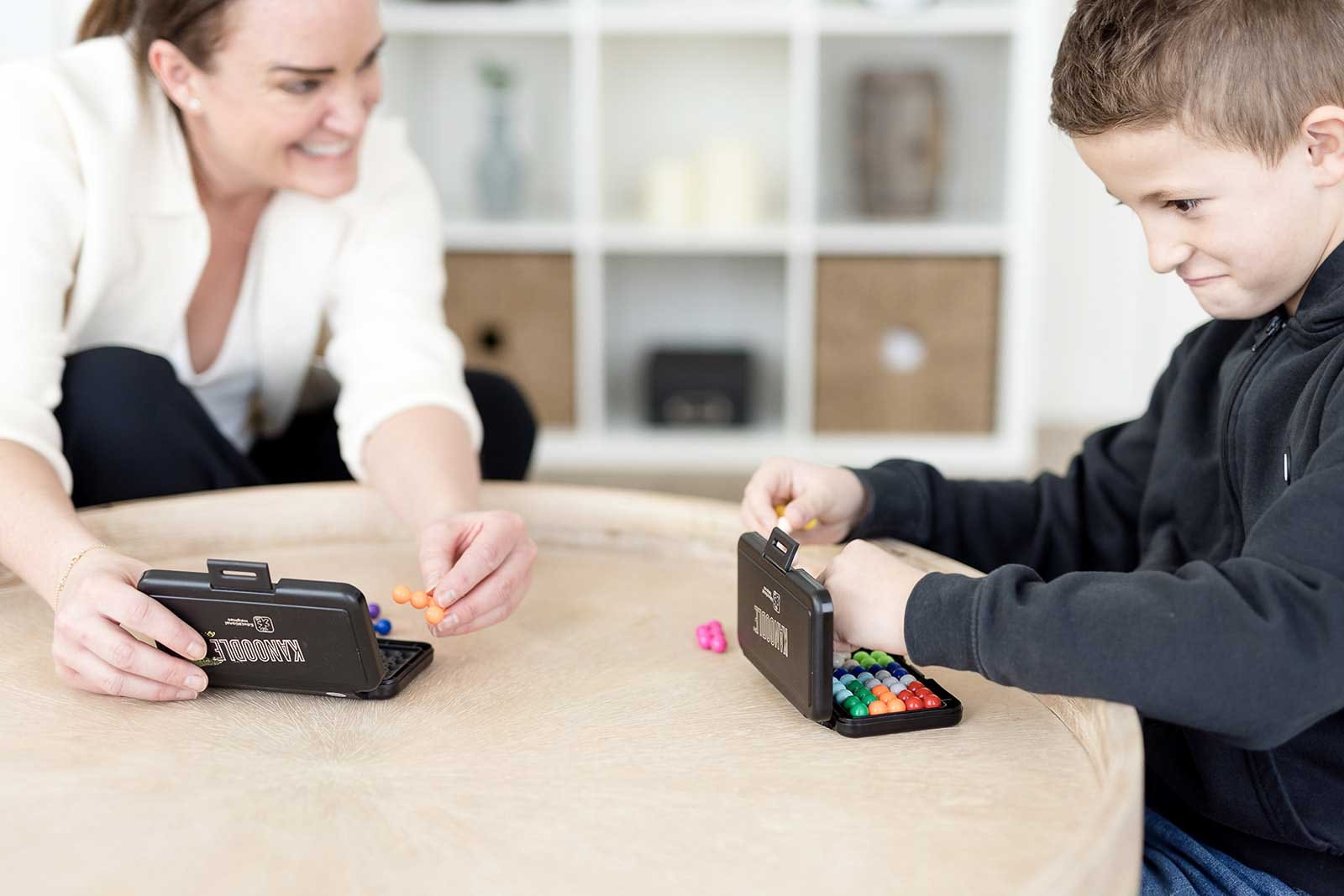
The Quiet Ways Stress Shows Up in Children
Not all stress in children is obvious. Some signs are easy to miss, especially in kids who seem to be coping on the surface.
It Doesn’t Always Look Like Stress
When adults feel stressed, it’s often recognizable — tension, worry, fatigue.
In children, it can look different.
Sometimes there’s no clear signal. No obvious distress. Instead, it shows up in smaller shifts — things that are easy to overlook or explain away.
A child might seem fine overall, but something in their behaviour, energy, or reactions has subtly changed.
Signs of Stress in Children Aren’t Always Obvious
Stress in children doesn’t always present as visible upset or anxiety.
It can show up as:
increased irritability or quick frustration
withdrawing from activities they usually enjoy
changes in sleep or appetite
becoming more sensitive to small challenges
difficulty transitioning between tasks
Individually, these can seem minor. Together, they often point to something building beneath the surface.
When a Child Looks “Fine” But Feels Different
Some children continue to function well even when they’re under stress.
They go to school. Complete tasks. Keep up with expectations.
But you might notice:
they seem more tired than usual
their patience is shorter
they need more reassurance
or they react more strongly to small situations
These shifts can be easy to miss because nothing appears significantly wrong. But they often signal that a child’s internal load is higher than it looks.
Why Stress Can Go Unnoticed
Children don’t always have the language to explain what they’re experiencing.
Instead of saying they feel overwhelmed, they might:
avoid certain situations
become more rigid or resistant
or express distress through behaviour rather than words
Stress can also build gradually. Without a clear starting point, it becomes harder to recognize as something that needs attention.
What Helps When Stress Shows Up This Way
When stress is less visible, the goal isn’t to immediately fix it — it’s to understand it.
That can involve:
noticing patterns over time
paying attention to small changes in behaviour
creating space for your child to express themselves
reducing pressure where possible
These shifts help you respond to what’s happening underneath, not just what’s visible on the surface.
When It Might Be Worth Looking More Closely
If these patterns continue or become more noticeable over time, it may help to look at them more directly.
Stress in children can be influenced by:
school demands
social dynamics
transitions or changes
internal expectations
If you’re unsure what’s driving the changes you’re seeing, it can help to explore it in a structured way.
At Ten Child Psychology,we work with parents to understand how stress is showing up for their child and how to support them in a way that fits their specific needs.
Looking a Little More Closely at Small Changes
Often, it’s not one big sign that matters — it’s the accumulation of smaller ones.
A shift in mood here. A shorter reaction there. A little more difficulty than usual.
When those changes start to cluster, they’re usually pointing to something worth paying attention to.
Until next time, go beyond,
Ten
FAQS
-
Yes. Stress in children can show up physically as headaches, stomachaches, fatigue, or changes in energy levels — even when there isn’t a clear medical cause.
-
Increased emotional reactions can be a sign that your child is feeling overwhelmed or has less capacity to manage frustration. Stress often lowers a child’s tolerance for small challenges.
-
Yes. Children may not connect their stress directly to school demands. Instead, it can show up at home through behaviour, mood changes, or resistance to routines.
-
In some cases, yes. Busy schedules, even with positive activities, can reduce downtime and increase pressure, especially for children who need more time to reset.
-
Short periods of stress are common. If signs continue for several weeks, increase over time, or start affecting daily functioning, it may be worth looking more closely.

When It’s Time to Talk to Someone: A Calgary Perspective for Adults and Teens
Sometimes it’s not about something being “serious enough” — it’s about noticing when things feel harder than they should. This article helps you make sense of when it might be time to talk to someone.
It’s Not Always Obvious When to See a Psychologist
Most people don’t arrive at therapy with a clear decision.
More often, it starts as a question in the background. Something feels off, or harder than it used to, but it’s difficult to say whether it’s “enough” to reach out.
You might still be functioning — keeping up with work, school, or responsibilities — but with more effort than before. That in-between space is where the question usually shows up.
When to See a Psychologist in Calgary
There isn’t a single threshold that tells you it’s time. But there are patterns that tend to point in that direction.
It’s often worth considering support when:
stress or emotional strain is sticking around longer than expected
everyday decisions feel harder to make or carry through
your capacity feels lower, even without a clear reason
things that used to feel manageable now require more effort
These aren’t always urgent signs. But they do suggest that something underneath may need attention.
When the Same Challenges Keep Returning
Sometimes the issue isn’t intensity — it’s repetition.
You might notice:
similar stress cycles showing up again and again
recurring tension in relationships
periods where things improve briefly, then fall back into the same pattern
Even if each instance feels manageable, the pattern itself can become draining.
This is often where therapy becomes useful — not just for support, but for understanding why the pattern keeps repeating.
When You’re Holding Things Together on the Outside
A common assumption is that therapy is only for when things are clearly falling apart.
In practice, many people seek support when everything looks stable — but doesn’t feel that way internally.
This can include:
feeling consistently on edge or under pressure
difficulty relaxing, even during downtime
a sense of disconnection or low engagement
Nothing may appear urgent from the outside. But internally, it can feel like you’re operating without much margin.
What a Psychologist Helps With
A psychologist doesn’t just focus on symptoms — they look at patterns.
This often includes:
how thoughts, behaviour, and emotions interact
how stress builds and is managed over time
how recurring challenges take shape across different areas of life
At Ten Psychology in Calgary, therapy is structured and collaborative. The focus is on developing clarity and practical ways of responding — not just short-term relief.
Finding the Right Time to Reach Out
There’s often a tendency to wait until something becomes clearly unmanageable.
But therapy doesn’t require a crisis.
In many cases, people reach out when something feels:
unclear
persistent
or harder than it should be
That’s usually enough of a starting point.
Until next time, go beyond,
Ten
If you’re considering working with someone, we have a team of registered psychologists supporting adults and teens across Calgary.
Click here to meet the team and learn more about our approach.
FAQS
-
If you’ve been trying to manage something on your own and it keeps returning or not improving, that’s often a sign that additional support could be helpful.
-
In Alberta, psychologists are regulated professionals trained in assessment, diagnosis, and treatment of mental health concerns. The term “therapist” can be broader and isn’t always regulated the same way.
-
Yes, you can book directly with a psychologist in Calgary. A referral is not required.
-
Psychologists also support concerns like ADHD, burnout, relationship challenges, emotional regulation, and life transitions — even when symptoms don’t fit a specific category.
-
Many people start therapy before things escalate. If something feels persistent or difficult to navigate, it can still be worth exploring.

Why Your Child Isn’t Listening — What’s Happening Beneath the Surface
When your child isn’t listening, it’s not always defiance. This article explores what may be getting in the way and how to respond more effectively.
You’ve Said It More Than Once — And Nothing Changes
You call their name. No response.
You repeat the instruction, a little more firmly this time. Still nothing. Eventually, it turns into frustration — maybe raised voices, maybe consequences, maybe both.
From your perspective, it can feel straightforward: they heard you, they just aren’t listening.
But that interpretation doesn’t always match what’s actually happening.
For many parents, this pattern shows up in everyday moments — getting out the door, transitions, simple requests that shouldn’t feel this difficult.
When Your Child Isn’t Listening, It’s Not Always Defiance
This is where things often get misunderstood.
When a child doesn’t respond, the immediate assumption is that they’re ignoring you on purpose. Sometimes that’s part of it — but often, something else is happening first.
Children can have difficulty:
shifting attention from one activity to another
processing verbal instructions in the moment
managing competing sensory input
organizing what they’ve been asked to do
From the outside, it can look like resistance. Internally, they may not have fully processed what was said — or they’re struggling to act on it quickly.
There’s a difference between not listening and not being able to respond right away.
Why Children Struggle to Listen in the Moment
Some children need more time than expected to register and act on instructions.
This becomes more noticeable when:
they’re deeply focused on something
the request has multiple steps
the environment is busy or overstimulating
In these moments, the issue isn’t understanding — it’s timing.
If a child is still processing what you said, repeating it louder or faster doesn’t necessarily help. It can actually increase pressure without improving follow-through.
This is often where frustration builds on both sides.
Why It Often Gets Harder Under Pressure
As frustration builds, communication tends to become more urgent.
Instructions get shorter, sharper, and more frequent. From a parent’s perspective, that makes sense — you’re trying to get a response.
But for some children, increased pressure makes it harder to organize a response, not easier.
They may:
shut down
become more avoidant
or appear to ignore you more consistently
What looks like oppositional behaviour can sometimes be a response to feeling overloaded in the moment.
What Helps When Your Child Won’t Listen
When listening becomes a pattern, small shifts in how instructions are given can make a meaningful difference.
This might include:
gaining your child’s attention before speaking
simplifying instructions into one step at a time
allowing a pause for processing
following up in a way that supports action, not just repetition
These adjustments aren’t about lowering expectations. They’re about making it easier for your child to follow through.
When It Might Be More Than a Listening Issue
If your child isn’t listening consistently — across home, school, and other settings — it may be connected to underlying patterns.
This can include:
attention differences
sensory processing challenges
emotional regulation difficulties
If you’re noticing this regularly and aren’t sure what’s driving it, it can help to look at the pattern more closely.
At Ten Child Psychology, we work with parents to understand how their child processes instructions, responds to demands, and navigates transitions — so that support is tailored to what’s actually happening beneath the surface.
Looking at It a Little Differently
If this keeps happening, it can help to shift the question.
Instead of:
→ “Why won’t my child listen?”
It becomes:
→ “What’s getting in the way of them responding right now?”
That shift doesn’t remove expectations. It changes how those expectations are supported.
Over time, that often leads to more consistency — and less tension in everyday interactions.
Until next time, go beyond,
Ten
FAQS
-
Sometimes children are deeply focused or not fully tuned into their surroundings. It may take time for them to shift attention, especially if they’re engaged in an activity.
-
Yes, especially in younger children. Listening involves attention, processing, and follow-through — all of which are still developing. Consistent difficulty, however, may be worth looking at more closely.
-
In some cases, yes. Children with ADHD may have more difficulty with attention shifting, processing instructions, and initiating tasks, which can affect how they respond.
-
Different environments place different demands on children. Home often feels less structured, which can make it harder for some children to organize their attention and behaviour.
-
If it’s happening frequently across different settings, leading to frustration, or not improving with support, it may be helpful to explore what’s underlying the pattern.

Why Do I Procrastinate Even When It Matters? ADHD and Avoidance Patterns
Procrastination isn’t always about laziness. For many adults and teens, it reflects deeper patterns linked to ADHD and avoidance. Here’s what’s actually happening.
You Meant to Start — So Why Didn’t It Happen?
You open your laptop with every intention of starting.
The task isn’t unclear. It isn’t optional. It’s something you’ve been carrying in the back of your mind for days. But instead of beginning, you pause. You check something else. You tell yourself you’ll get to it shortly.
Time passes, and the task stays where it is.
What makes this harder to make sense of is that it doesn’t match how much you care. In many cases, the more important something is, the harder it becomes to begin.
For adults and teens in Calgary, this pattern often shows up in specific areas — school, work, responsibilities that carry weight. Over time, it starts to feel less like a habit and more like something that keeps repeating, even when you’re trying to change it.
It Doesn’t Start Where You Think It Does
Procrastination with ADHD is often misunderstood as a lack of motivation.
But most people already know what needs to be done. They’ve thought about it, planned around it, and often feel a level of pressure because of it. The issue isn’t awareness.
It’s the gap between knowing and starting.
Tasks that are unclear, multi-step, or mentally demanding can be harder to initiate. Even when they’re manageable in reality, they can feel difficult to engage with at the starting point.
From the outside, this can look like avoidance. Internally, it often feels more like being stalled rather than choosing not to act.
Why Important Tasks Are Often the Ones That Get Delayed
There’s a pattern that shows up consistently: the more something matters, the harder it can be to begin.
Tasks tied to deadlines, expectations, or performance tend to carry more weight. That weight isn’t always obvious, but it affects how the task is experienced.
ADHD impacts how effort is organized and how action gets initiated. When a task feels:
open-ended
mentally demanding
or tied to outcomes that matter
starting can require more activation than expected.
Avoidance can step in as a way to reduce that pressure, even briefly. It creates relief in the moment, but it also makes returning to the task more difficult later.
When Procrastination Feels Bigger Than the Task Itself
Sometimes the difficulty isn’t the task — it’s how the task is being processed.
A single responsibility can register as:
undefined
too large
or competing with too many other demands
This creates friction right at the starting point.
Perfectionism can add another layer. If the expectation is that something should be done properly from the beginning, it becomes harder to approach it casually.
There can also be difficulty with transitions. Moving from one activity into another, especially when your attention is already engaged elsewhere, can take more effort than expected.
Individually, these factors seem manageable. Together, they can make starting feel out of proportion to the task itself.
Working With Procrastination Instead of Against It
Trying to override procrastination with pressure tends to backfire.
A more effective shift is to change how the task is structured and approached.
That might look like:
narrowing the starting point to something very specific
reducing how many decisions are required before beginning
separating starting from finishing
noticing when avoidance is linked to overload rather than effort
For many adults and teens, consistency improves when the task becomes easier to enter, not when more pressure is applied.
When This Pattern Might Be Linked to ADHD
If procrastination keeps showing up in the same ways, it may be connected to underlying patterns related to ADHD or executive functioning.
This is often the case when:
starting feels harder than completing
deadlines create repeated stress cycles
work gets done in bursts under pressure
or strategies don’t seem to hold over time
At Ten Psychology in Calgary, this kind of pattern is explored in a practical way — looking at how tasks are structured, how effort is activated, and where the breakdown is happening.
Looking at the Pattern More Precisely
If this keeps happening, it’s worth stepping back and looking at the pattern itself.
Procrastination tends to follow specific conditions — certain types of tasks, certain levels of pressure, certain moments where starting feels heavier than expected.
Once those patterns are clearer, the focus shifts. It’s no longer about forcing yourself to push through. It becomes about reducing the friction that’s getting in the way.
That shift is often what allows follow-through to feel more consistent — and less effortful over time.
Until next time, go beyond,
Ten
FAQS
-
Procrastination is often linked to how the brain initiates tasks, not how much something matters. When something feels overwhelming, unclear, or high-pressure, it can be harder to start — even if it’s important.
-
Not always, but it can be. Procrastination that involves difficulty starting, inconsistent follow-through, or relying on last-minute pressure can reflect ADHD or executive functioning patterns.
-
Last-minute pressure increases urgency, which can make it easier to focus and begin. Over time, this can create a pattern where deadlines become the main trigger for action.
-
Rather than forcing discipline, it helps to adjust how tasks are approached — making the starting point clearer, smaller, and easier to access.

Does My Child Have Anxiety? Signs Parents Often Miss
Not sure if your child has anxiety? Learn the signs parents often miss and how to support your child with more clarity and confidence.
It Doesn’t Always Look the Way You Expect
When people think about anxiety, they often picture a child who is visibly worried or afraid.
But for many children, it doesn’t show up that clearly.
Instead, it can look like:
refusing to go somewhere
getting upset over small changes
needing constant reassurance
or reacting more strongly than expected
This is often when parents start asking, “Is this just a phase, or is something more going on?”
What Anxiety Can Look Like in Children
Children don’t always have the language to explain how they feel.
So anxiety tends to show up through behaviour.
A child who feels anxious might:
avoid situations that feel uncomfortable
become easily overwhelmed
cling more than usual
struggle with transitions
have physical complaints like stomach aches
It’s not always obvious—but there’s usually a pattern over time.
Signs Parents Often Miss
Some signs of anxiety are easy to overlook because they don’t immediately seem connected:
Taking a long time to warm up in new situations
Asking the same questions repeatedly for reassurance
Getting stuck on small details or worries
Avoiding things they used to enjoy
Becoming upset before school, activities, or social events
Seeming irritable or “on edge” without a clear reason
It’s not just about the behaviour itself. It’s about how often it happens and how much it’s affecting your child’s day.
Why It Can Be Confusing
Many of these behaviours can be mistaken for something else.
An anxious child might be seen as:
stubborn
sensitive
defiant
or overly dependent
But often, what’s underneath is a child trying to manage a feeling that feels too big or too uncertain.
That’s why it can help to shift the question from:
“Why are they acting like this?”
to
“What might be making this feel hard for them?”
What Helps at Home
You don’t need to have everything figured out to start supporting your child.
What matters most is how you respond in everyday moments:
Stay calm and predictable when emotions rise
Acknowledge what your child is feeling without rushing to fix it
Give reassurance, but also build confidence gradually
Prepare them ahead of transitions or new situations
Break overwhelming tasks into smaller steps
Consistency and safety matter more than having the perfect response.
When It Might Be Time to Get Support
If anxiety is starting to impact your child’s daily life—like school, sleep, or relationships—it can be helpful to get support.
At Ten Psychology in Bridgeland, we work with children and families across East Calgary to better understand what’s behind behaviours and how to support them in a way that feels manageable.
Reaching out doesn’t mean something is wrong. It means you’re looking for clarity and support.
FAQs
Is anxiety common in children?
Yes. Many children experience anxiety at different stages. It becomes more important to address when it starts to interfere with daily life.
Can anxiety go away on its own?
Sometimes it improves with time, but many children benefit from support to build confidence and coping skills.
What’s the first step if I’m unsure?
Start by noticing patterns and what situations seem to trigger reactions. From there, support can help guide next steps.
You’re Not Missing Something—You’re Noticing It!
If you’re asking whether your child might be experiencing anxiety, it usually means you’ve already picked up on something important.
You don’t need to have a diagnosis to start supporting your child.
Paying attention, staying consistent, and being open to support is already a strong place to start.
Until next time, go beyond,
Ten
If you’re starting to see patterns that feel hard to manage on your own, it can help to better understand how anxiety shows up and what support can look like.
You can learn more about our approach to working with anxiety in children and families on our anxiety support page in Ten Child Psychology, including how we help children build confidence and feel more secure in everyday situations.

Why Do I Feel So Overwhelmed All the Time? Understanding Stress in Adults and Teens
Feeling overwhelmed all the time? Learn how stress builds in adults and teens, what it looks like day-to-day, and how to start feeling more steady and in control.
When Everything Starts to Feel Like Too Much
April is Stress Awareness Month, but for many people, stress isn’t something that shows up once a year. It’s something that slowly builds until it starts to affect how you think, feel, and move through your day.
You might find yourself thinking, “Why do I feel so overwhelmed all the time?”
Or noticing that even simple tasks feel harder to start, let alone finish.
If that feels familiar, you’re not alone. And you’re not overreacting. This is often how stress shows up when it’s been building for longer than we realize.
What Does Feeling Overwhelmed Actually Mean?
Feeling overwhelmed is your system’s way of saying there’s too much to hold right now.
For adults, this might come from:
Constant responsibility
Work or academic pressure
Decision fatigue
For teens, it can look like:
School expectations
Social pressure
Feeling like they have to keep up, even when they’re struggling
Different situations, but often the same internal experience. Too much, without enough space to recover.
Signs You Might Be More Stressed Than You Realize
Stress doesn’t always feel intense or obvious. Often, it shows up in quieter ways:
Trouble focusing or staying organized
Feeling constantly behind, even when you’re trying
Increased irritability or emotional sensitivity
Avoiding tasks because they feel too big
Feeling mentally tired but unable to fully rest
You might still be functioning, but everything takes more effort than it used to.
Why Stress Builds Without You Noticing
One of the most confusing parts of feeling overwhelmed is that it doesn’t always match what’s happening around you.
You might think:
“I should be able to handle this”
“Other people have more going on”
But stress isn’t just about what’s happening. It’s about how long you’ve been carrying it without a real break.
When there’s no space to reset or process what’s building up, your system eventually reaches a limit.
What Helps When You Feel Overwhelmed
When everything feels like too much, the instinct is often to push harder or try to catch up.
But that usually adds more pressure.
Instead, try shifting the approach:
Break things into smaller, manageable steps
Focus on one thing at a time, even if it feels slow
Give yourself permission to pause without needing to justify it
Notice what helps you feel even slightly more grounded
You don’t need to solve everything. You just need enough space to feel steady again.
When It Might Be Time to Talk to Someone
If the feeling of being overwhelmed isn’t easing, or if it’s starting to affect your daily life, it can help to talk it through with someone who understands how stress works beneath the surface.
Talking to a psychologist in Calgary can help you understand what’s contributing to that overwhelm and find a way forward that feels more manageable.
This doesn’t mean things are too far gone.
It means you’re paying attention.
Support can help you:
Understand what’s contributing to the overwhelm
Build more sustainable ways to cope
Feel more steady, even when life is busy
FAQs
Is it normal to feel overwhelmed all the time?
It’s common, but it’s not something you have to stay stuck in. Ongoing overwhelm is usually a signal that something needs support or adjustment.
Why do small tasks feel so hard?
When your mental load is already high, even simple tasks can feel overwhelming because your system is already stretched.
Does stress affect teens differently than adults?
The sources may differ, but the experience of overwhelm can feel very similar, especially when there’s pressure without enough support.
It’s Not That You’re Failing. It’s That You’ve Been Carrying Too Much
If everything feels overwhelming right now, it’s not a reflection of your ability.
It usually means you’ve been holding more than your system can comfortably manage, often for longer than you realize.
That can change.
Not by pushing harder, but by understanding what’s been building and giving yourself permission to approach things differently, one step at a time.
Until next time, go beyond,
Ten
You might also notice that for some people, this sense of constant overwhelm connects to patterns like high-functioning anxiety—where things appear manageable on the outside but feel much heavier internally. If that resonates, you can explore this further in our guide on signs of high-functioning anxiety.

How to Find the Right Psychologist in Calgary
Finding the right psychologist in Calgary involves more than availability. Learn what to consider, what questions to ask, and how to choose a therapist who fits.
Searching for a psychologist in Calgary can feel surprisingly overwhelming.
You open a directory. There are dozens of profiles. Different credentials. Different specialties. Different approaches. Some feel clinical. Some feel vague. It can be difficult to know what actually matters.
Most people are not just looking for “a therapist.” They are looking for someone who understands what they are carrying — and who feels steady enough to help them sort through it.
Finding the right fit is less about choosing perfectly and more about knowing what to look for.
Start With the Concern, Not the Title
Before comparing credentials, it helps to clarify what is bringing you in.
Are you feeling persistently anxious? Burned out? Struggling in your relationship? Navigating a major life transition? Wondering about ADHD or executive functioning challenges?
Many psychologists in Calgary specialize in particular areas. Some focus on anxiety and mood concerns. Others work primarily with trauma, couples, or neurodiversity. Starting with your primary concern narrows the search in a meaningful way.
You do not need a perfect description of what is wrong. Even a general sense — “I feel overwhelmed” — is enough to begin.
Consider Their Approach
Not all therapy feels the same.
Some psychologists work in a highly structured, skills-based way. Others focus more on insight, patterns, and relational dynamics. Many integrate both.
If you value practical tools and clear strategies, you may look for clinicians trained in approaches like Cognitive Behavioural Therapy (CBT). If you are more interested in understanding deeper patterns or long-standing relational themes, you may want someone who works from a more exploratory framework.
Neither approach is better. The question is what feels aligned with how you process and grow.
Pay Attention to Specialization
In Calgary, many clinics are generalist practices, while others are more focused.
If you are seeking support for:
It can be helpful to choose a psychologist whose practice regularly addresses those concerns. Familiarity often brings clarity and efficiency in the therapeutic process.
Credentials Matter — But Fit Matters More
Psychologists in Alberta are regulated professionals with doctoral or master’s-level training. You can confirm registration through the College of Alberta Psychologists.
But beyond credentials, pay attention to tone.
When you read a psychologist’s website, ask yourself:
Do I feel understood?
Does their language resonate with how I experience things?
Do they seem thoughtful and grounded?
Research consistently shows that the therapeutic relationship is one of the strongest predictors of outcome. Expertise matters. So does feeling safe and respected.
Ask Practical Questions
It is reasonable to ask:
Do you offer in-person or virtual sessions?
What are your fees?
Do you provide direct billing?
What does the first session look like?
How long do clients typically work with you?
Clarity reduces hesitation. Most psychologists welcome these questions.
Notice Your Internal Response
Sometimes, the most useful information is subtle.
After reading a profile or having an initial consultation, notice your reaction. Do you feel slightly more settled? Or more unsure?
Therapy works best when there is a sense of psychological safety. You do not need immediate certainty — but you should feel enough comfort to begin.
You Don’t Need to Be in Crisis
Many people assume they should only see a psychologist in Calgary when things are severe. In reality, therapy is often most effective when concerns are emerging — not entrenched.
If you are noticing patterns of stress, self-doubt, low mood, or relational tension, it is reasonable to explore support.
You do not need a diagnosis to benefit from clarity.
A Thoughtful Approach to Therapy in Calgary
At Ten Psychology, we work with teens, adults, and couples navigating anxiety, burnout, depression, ADHD, and high-performing stress patterns. Our approach is insight-driven, structured, and grounded in helping clients understand not just what is happening — but why.
If you are looking for a psychologist in Calgary and want a steady, thoughtful place to begin, we welcome you to reach out.
Finding the right therapist is not about choosing perfectly. It is about choosing someone who feels capable of helping you move forward — at a pace that respects where you are.
Until next time, go beyond,
Ten

When Success Doesn’t Feel Secure: Imposter Syndrome in Calgary Professionals
Imposter syndrome in high-achieving professionals can feel isolating and exhausting. Learn why it happens and how therapy in Calgary can support steadier confidence.
From the outside, it looks like you’re doing well.
You’re competent. Reliable. Trusted. You’ve worked hard to get where you are. And yet, there’s a quiet narrative running underneath it all:
When will they realize I’m not as capable as they think?
Imposter syndrome is common among high-achieving professionals in Calgary — particularly in competitive industries where performance is visible, and expectations are high. It rarely looks like self-doubt on the surface. More often, it looks like overpreparing, overworking, and privately bracing to be “found out.”
At Ten Psychology, we often meet capable adults who feel like they are one mistake away from exposure. The success is real. The anxiety is real, too.
What Imposter Syndrome Actually Feels Like
Imposter syndrome is not simply modesty. It’s not humility. It’s a persistent internal belief that your achievements are somehow accidental — that you’ve fooled people into overestimating you.
You might notice:
Difficulty internalizing praise
Attributing success to luck, timing, or other people
Fear of being exposed as incompetent
Overworking to prevent mistakes
Avoiding new opportunities in case you fail
A constant sense that you need to prove yourself
Even promotions can feel destabilizing rather than validating.
Instead of relief, you feel pressure.
Why High Achievers Are Especially Vulnerable
In Calgary’s professional culture — whether in corporate leadership, healthcare, entrepreneurship, or specialized industries — competence is expected. Many high performers learned early that achievement created safety, approval, or stability.
Over time, identity can become tightly linked to performance.
If your sense of worth is tied to how well you do, any normal mistake can feel like evidence that you were never qualified to begin with.
Perfectionism often sits underneath imposter syndrome. So does high-functioning anxiety. The very traits that contribute to success — conscientiousness, responsibility, attention to detail — can also fuel self-doubt.
The Hidden Cost
Imposter syndrome is exhausting. It can lead to chronic stress, difficulty relaxing, and an inability to enjoy milestones. Instead of feeling proud, you feel relief that you “got away with it.”
Over time, this can contribute to:
Avoidance of growth opportunities
A quiet erosion of confidence
The outside trajectory continues upward. The inside feels increasingly fragile.
How Therapy Helps with Imposter Syndrome
Therapy for imposter syndrome is not about artificially boosting confidence. It is about building grounded self-trust.
At Ten Psychology, we work with professionals in Calgary to:
Identify the origins of performance-based worth
Untangle identity from productivity
Challenge distorted self-assessments
Develop a more stable internal standard
Tolerate visibility and growth without panic
Often, the work is less about “becoming more confident” and more about becoming less driven by fear.
When confidence becomes internally anchored rather than externally measured, achievement starts to feel steadier.
When to Consider Reaching Out
You might consider speaking with a psychologist if:
Success consistently feels undeserved
You are chronically overworking to avoid failure
Promotions or visibility increase anxiety rather than pride
You struggle to accept positive feedback
Rest feels unsafe because you equate slowing down with falling behind
You do not need to wait until burnout sets in. Imposter syndrome is often easier to shift when addressed early.
Remember: You Are Not the Only One!
Many high-achieving adults assume they are alone in this experience. They assume everyone else feels secure and capable.
In reality, imposter syndrome is common — especially among thoughtful, driven individuals.
If you are navigating self-doubt beneath outward success, therapy can provide space to recalibrate. Not by lowering your standards, but by loosening the fear attached to them.
Ten Psychology offers therapy for adults and professionals in Calgary navigating anxiety, perfectionism, burnout, and imposter syndrome.
You can succeed without living in constant fear of being exposed.
Until next time, go beyond,
Ten